
Why the Best Wedding Receptions Feel Effortless
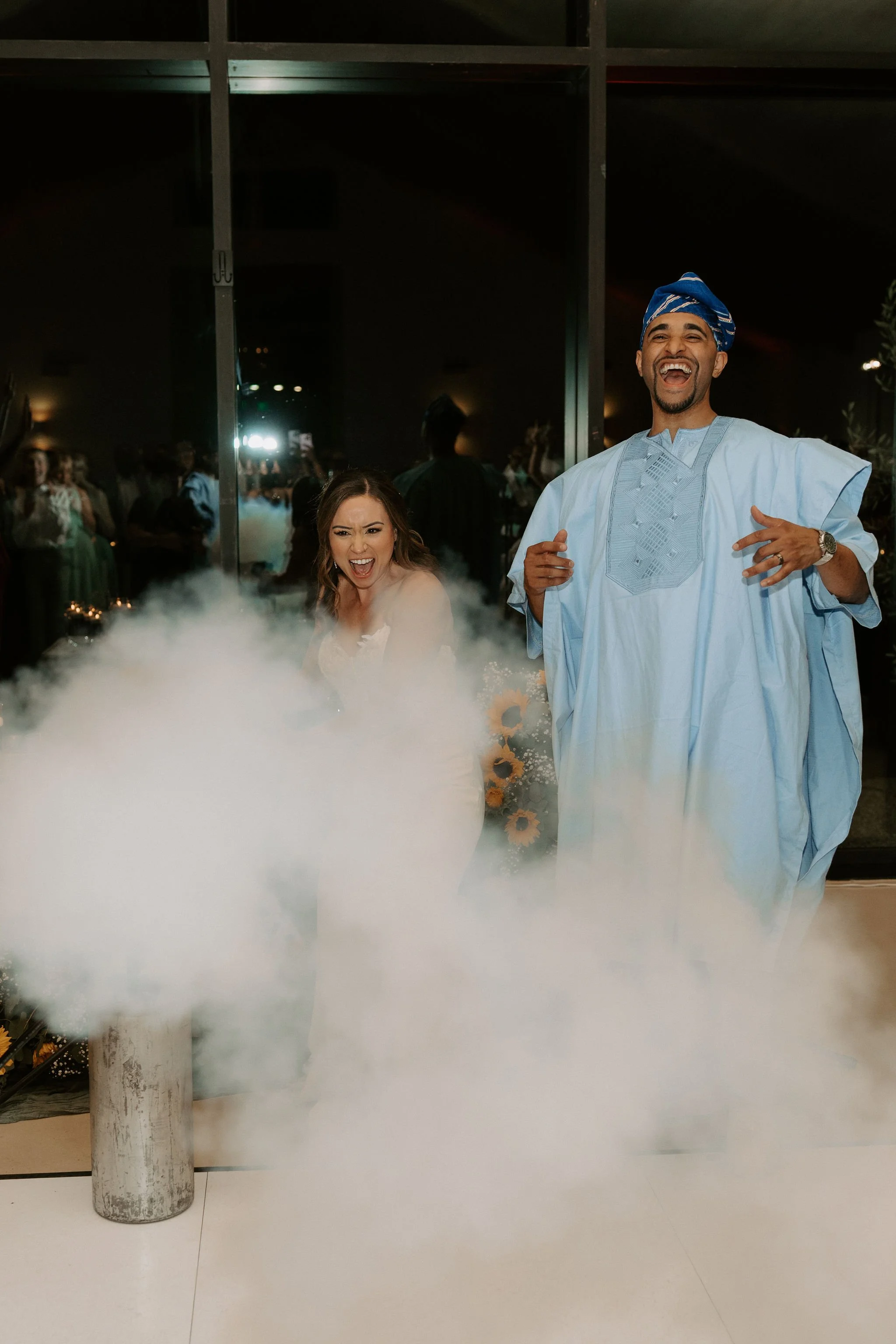
Planning a Phoenix or Scottsdale wedding? Learn how music, timing, and real-time room leadership shape the way your guests experience the night. Save this for reception planning. Photo courtesy Marika Photography
The best wedding receptions usually do not feel complicated.
They feel smooth.
Guests are dancing before they realize it. Transitions happen without announcements. The couple is present — actually present — instead of watching the clock or managing details. The whole night seems to move on its own.
That feeling is not an accident. And it does not come from a perfect timeline or the right playlist.
It comes from someone paying close attention, reading the room in real time, and making hundreds of small decisions that nobody notices because they work.
There Is a Moment Early in the Night When You Can Tell
I have been doing this long enough to recognize it before most people walk through the door.
It happens early — sometimes at the ceremony, sometimes right before the grand entrance, sometimes in the first sixty seconds after the dance floor opens. It is quiet and fast and easy to miss. But once you know what it looks like, you see it clearly.
It is the moment when the room is ready.
The couple walks in and their people lose it — not politely, genuinely. Someone in the back is already on their feet. The energy in the room is warm and loose and open. And something unlocks.
That is the signal. Not that the night will be perfect. That the night is willing to go somewhere.
My job from that moment is to meet it — and then to guide it without forcing it.
Effortless Does Not Mean Unplanned
Here is what effortless does not mean.
It does not mean casual. It does not mean winging it. And it does not mean the couple handed someone a playlist and hoped for the best.
The receptions that feel the most natural are almost always the ones with the most preparation behind them. The couple took time to communicate what mattered to them — not just song requests, but how they wanted the night to feel. Who their guests are. What kind of energy they were going for. What moments were sacred and what moments were meant to be loose.
That information shapes every decision made once the lights come on.
In Phoenix and Scottsdale, where weddings can range from intimate backyard gatherings to full-scale resort ballrooms, no two rooms are the same. The setup at a Paradise Valley estate feels different from a ceremony at a downtown venue. The energy a 40-person reception carries walks in differently than 200 guests who have been pre-partying since noon.
Effortless receptions are planned. They are just planned well enough that the planning disappears.
The Room Has to Be Read, Not Just Managed
A timeline is a tool. It is not the night.
What the timeline cannot account for is the actual energy in the room at 8:47 pm when dinner ran twelve minutes long, the bride's aunt is crying happy tears near the dance floor, and the groomsmen are ready to go but the grandparents are still finishing dessert.
That is not a timeline problem. That is a reading-the-room moment.
The DJ who handles that well is not looking at a spreadsheet. They are watching the floor, listening to the room, checking in quietly with the planner, and making a judgment call about what the next ten minutes need.
Sometimes that means slowing down. Sometimes it means creating a small burst of energy to shift the room's attention. Sometimes it means holding back and letting a moment breathe.
This is the part of the job that does not show up on a contract. It is not something you can fake. It develops over years of being in real rooms with real people and learning how crowds actually move.
Music Is Only One Part of What Moves a Room
Guests at a wedding do not just respond to songs. They respond to the arc of the night.
The way a reception moves from cocktail hour into dinner, from dinner into toasts, from toasts into the first dance — each of those transitions either carries momentum or loses it. And that momentum is shaped by tempo, volume, selection, and silence more than any single song choice.
Early in the night, music sets tone. It tells guests what kind of evening this is going to be without anyone saying a word. The wrong energy at cocktail hour can make a room feel stiff before the night even starts. The right energy starts building warmth before most people notice it happening.
By the time the dance floor opens, a room that has been guided well is already moving toward it. Guests do not have to be coaxed. They are ready.
The difference between a dance floor that takes forty minutes to fill and one that fills in the first song is rarely about which song was played. It is about everything that happened before that song.
Vendor Communication Changes the Night
Some of the smoothest receptions I have been part of were not smooth because everything went according to plan.
They were smooth because every vendor in the room was communicating.
The photographer signaling they need two more minutes before the cake cut. The planner letting me know the maid of honor speech is running long. The videographer indicating they want a beat before the couple walks back out. These are small exchanges that most guests never see — but they protect moments that the couple will watch in their wedding video for the rest of their lives.
When vendors are aligned, problems become adjustments instead of interruptions. A first dance starts thirty seconds late and nobody notices because the room was already warm. A toast runs long and the energy holds because the music coming out of it was chosen to match what the room needed, not what the clock said.
For couples planning weddings in Scottsdale, Phoenix, or anywhere in the Valley, working with vendors who communicate well with each other is one of the most underrated decisions you can make. The difference it creates is felt in how easy the night feels — not just for you, but for everyone in the room.
Timing Makes Moments Land
There is a difference between a moment happening and a moment landing.
Moments happen on the timeline. They land when the room is ready for them.
The grand entrance that lands is the one that comes out of the right energy — not too early in the evening, not after the room has already peaked and come down. The last dance that lands is the one that feels like a natural finish, not a contractual obligation.
Getting that timing right is part feel and part experience. You learn it by being in enough rooms to understand how energy rises and falls across a reception — how long it takes a mixed crowd to warm up, when to let the floor breathe, when a transition has to be sharp versus when it needs to be gradual.
For couples who care about how their night moves — not just what happens but how it happens — this is where the real work lives.
What Guests Remember Is the Feeling
Ask anyone what they remember about a great wedding reception and they will not usually start with the songs. They will start with how it felt.
It felt like the whole room was in it together. It felt like the night had energy from the start. It felt like it went too fast. It felt like everyone forgot to be self-conscious and just had a good time.
That is the goal. Not a flawless event. Not a perfectly executed timeline. A night where the room came alive and the couple was in the middle of it, fully present, not managing anything.
The receptions that create that feeling are not accidental. Someone was guiding the room — quietly, intentionally, without making it about themselves.
A Great Reception Is Guided, Not Forced
There is a version of DJ work that is performative. It is about the DJ being seen, being heard, commanding the room.
And then there is the work that actually serves the night.
The DJ who serves the night is the one who makes the couple look great, makes the planner's job easier, makes the guests feel like the energy was always going to be that good. The one who disappears into the execution so completely that the night feels like it ran itself.
That is the standard I hold myself to in every room — whether it is an intimate ceremony in the Phoenix foothills or a full ballroom reception in Scottsdale.
The best wedding receptions feel effortless because someone is protecting the flow.
That is the work.
DJ Nate Murray is a wedding DJ and MC serving Phoenix, Scottsdale, Paradise Valley, and Southern California. For availability, visit [Check Availability].