
What Sets a Wedding Host Apart From a DJ
The Moment Guests Feel It—but Can’t Name It
There’s a moment during nearly every wedding where the room either settles into confidence—or feels slightly unsure of what’s coming next.
Nothing is technically wrong.
The music is playing.
The timeline is moving.
And yet, something feels unanchored.
Guests glance around. Conversations trail off. Movement hesitates.
This moment—often invisible to couples—is where the difference between a DJ and a wedding host becomes unmistakable.
Because a host doesn’t wait for the night to tell them what to do.
They guide it.
What This Post Will Help You Understand
Why the most memorable weddings feel led, not managed
The difference between playing music and hosting an experience
How timing and presence shape guest confidence
Why planners prioritize hosting skill over performance
What couples gain when leadership replaces volume
DJ vs. Host: A Meaningful Distinction
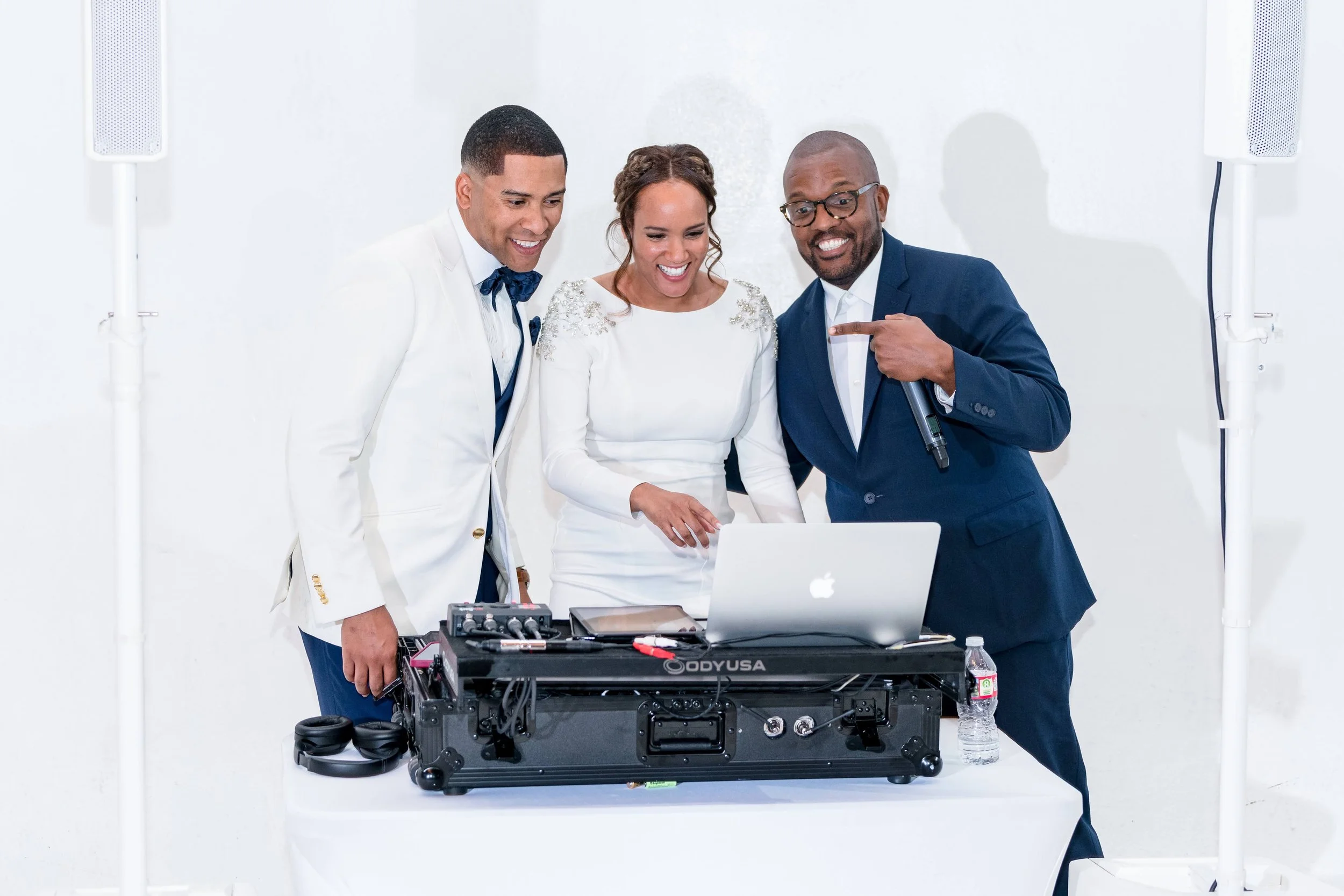
Three people smiling behind a DJ setup with a laptop and audio equipment.
A DJ’s role is to play music.
A wedding host’s responsibility is to hold the room.
That means:
Knowing when to speak—and when silence is stronger
Reading body language instead of watching a clock
Protecting emotional moments from interruption
Making transitions feel inevitable rather than announced
Most guests can’t articulate this difference.
They simply feel the ease when it’s done well.
Hosting Is About Emotional Timing
Timing isn’t measured in minutes.
It’s measured in readiness.
A host senses when:
A room has emotionally arrived at a moment
A toast needs one more breath before it begins
The energy needs grounding before it rises again
These decisions aren’t solved by playlists or software.
They come from experience, restraint, and presence.
Sound Curation Is Only One Tool
Music matters—but it isn’t the lead instrument.
A wedding host uses sound the way a conductor uses an orchestra:
To build momentum
To create space
Or to disappear entirely
When hosting is done well, music never competes with the moment.
It supports it.
The Role of Presence
Presence is not volume.
Presence is certainty.
Guests subconsciously look for signals:
Is someone guiding this night?
Are we safe to relax into it?
Can we trust what’s coming next?
A true host answers those questions without explanation.
The room settles because leadership is felt—not announced.
The Nate Murray Breakdown
After years of weddings across Phoenix, Scottsdale, and Los Angeles, one pattern is consistent:
The most memorable nights aren’t louder.
They’re clearer.
Clear pacing.
Clear transitions.
Clear emotional direction.
When couples say, “Everything just flowed,” they’re describing hosting—not music.
Where DJs Lose the Room (Without Realizing It)
Most issues don’t come from mistakes.
They come from absence.
Speaking when silence would land better
Letting energy drift instead of guiding it
Following a playlist instead of the people
A wedding host doesn’t outsource awareness.
They stay present.
Five Ways Hosting Changes the Experience
Guests Feel Oriented
They always understand where they are in the night.Moments Land Cleanly
Nothing feels rushed or delayed.Transitions Feel Invisible
No awkward pauses. No forced announcements.Energy Builds Naturally
Momentum grows instead of restarting.Couples Stay Present
They experience the night rather than manage it.
Phoenix, Scottsdale, and Los Angeles Expectations
In high-end markets, hosting is expected—even if it’s not always named.
Scottsdale values composure and polish
Phoenix demands adaptability and environmental awareness
Los Angeles expects cultural fluency and pacing
Across all three, leadership matters more than features.
How Hosting Supports the Planner’s Vision
Planners don’t need another personality in the room.
They need clarity.
They rely on partners who:
Anticipate moments before they arrive
Communicate quietly and early
Protect the pacing they’ve spent months designing
Reduce decision-making on the wedding day
When hosting is handled with restraint and awareness, every other vendor performs better.
The timeline holds.
The room stays calm.
The experience feels intentional from start to finish.
When the Night Is Led, Not Pushed
Your wedding doesn’t need more noise.
It needs direction.
When hosting is done well, leadership isn’t announced—it’s felt.
The room relaxes.
Moments land without effort.
Energy moves with intention rather than force.
That’s the difference between a night that happens—
and one that unfolds.
A Calm Invitation
For couples planning a wedding where presence, flow, and emotional timing matter, I’m always happy to talk through what hosting-led design looks like.
For planners, collaboration starts early—and stays quiet on the day it matters most.
Related Reading
Inside the Velvet Rope Planning System
5 Questions That Reveal Whether Your DJ Can Design the Night
How to Honor Your Love of Club Music and Your Family’s Taste